The recovery of the miracle man
Don't Leave God Alone: How to Get God's Attention, Remain in His Presence, and Even Change His Mind to Make a Difference in Your WorldThe recovery of the miracle man is presented as a near-fatal medical crisis in which a family’s dying hope becomes the setting for sustained prayer and an unexpected recovery. The patient’s survival follows months of an undetected illness, emergency surgery, septic shock, multiple-organ failure, and a prognosis of less than fifty percent, while the family refuses to interpret delayed improvement as final defeat.
Medical Crisis and Escalation
The crisis began on July 4 during a family camping trip, when the patient developed a fever of 104 degrees. Several doctors could not identify its cause, although antibiotics brought the fever under control after three weeks. He appeared to recover, but remained weak; by the first week of December, the mysterious fever returned with much greater force. One morning he awoke faint and seeing spots, prompting his mother-in-law to call an ambulance.
The emergency response revealed a far more dangerous condition than the family had known. He was transferred by helicopter to another medical facility, initially because doctors suspected a cardiac problem. Exploratory surgery instead found diverticulitis and a ruptured bowel. Months of undetected infection had poisoned his body and produced septic shock. The account emphasizes the narrowness of the margin: had he gone back to bed that morning, he would have been dead by the time his mother-in-law returned from work that evening.
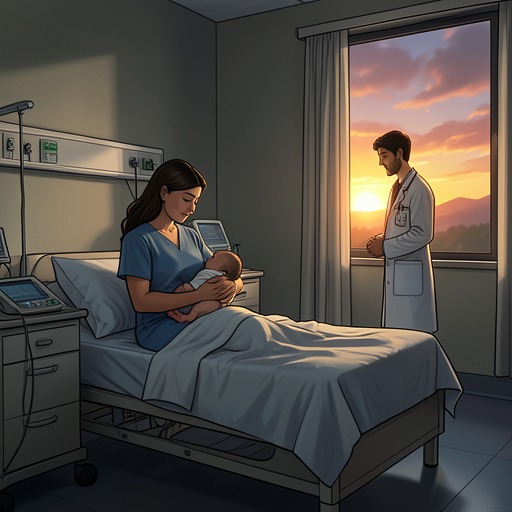
Surgery repaired the bowel, but the infection had already overwhelmed his system. He was placed in a medical coma while doctors attempted to stabilize him. His body swelled to three times its normal size, his temperature rose to 105 degrees, and nineteen intravenous bags supplied medicines, fluids, blood, and food. Eight physicians treated him as his liver, kidneys, and lungs began to fail. He required full dialysis and a ventilator and experienced multiple organ and renal failure, turning an initially mysterious fever into a life-threatening systemic collapse.
Family Vigil and Spiritual Battle
The patient’s wife and her sister drove to see their father, only to discover that the family was entering what the narrative calls one of the greatest spiritual battles of their lives. Prayer continued around the clock. The narrator remained about three hours away with two small children, one of them an infant, while the family faced the surgeon’s first assessment: less than a fifty percent chance of survival.
The family’s response was not to deny the medical facts but to contest their finality through faith. When the surgeon gave the survival estimate, the patient’s wife’s mother answered calmly and firmly, “Doctor, my God is bigger than that. I believe we should stay on the 50 percent side of the positive then!” Seven days later, the narrator drove to the hospital with the children. Their grade-school son told his grandfather, “Grandpa, you take up your bed and go home praising God!” These statements function as verbal acts of expectation within the family’s continuing prayer.
The recovery did not begin with an immediate reversal. Days passed with little visible change, and the dream of the patient’s survival seemed to be dying. The family sometimes felt that prayer was not working. Yet after two weeks he still had not died. Doctors had not declared him better, but his continued life exceeded what the family had expected from the severity of his condition. In the book’s interpretation, this delay becomes evidence that a miracle may be developing invisibly while observers are still waiting for a decisive outward sign.
The Naming of the Miracle Man
A turning point came when Brenda prayed that the doctors would call her father a “miracle man.” One doctor heard the prayer, and before long the other physicians began speaking more positively and using that name as well. The title first appears as a spoken expectation and then becomes attached to the patient through the medical staff’s changing description of him.
The physical recovery proceeded gradually rather than theatrically. Medicines were reduced little by little, machines were removed, and eventually the patient woke from the medical coma. Staff members celebrated his awakening. A nurse who had not seen him for some time placed her hand over her mouth in disbelief and said, “Oh my God! That's the man from room ten.” The recognition scene captures the scale of the reversal: the patient who had appeared almost lost to the hospital’s crisis machinery was now visibly identifiable as the same man who had survived it.
The surgeon later attributed the outcome outside ordinary medical accomplishment, saying, “It certainly wasn't anything we physicians did. It was a work of faith and prayer.” The narrative therefore preserves two interpretive authorities at once: physicians diagnose, operate, and sustain the patient through intensive treatment, while the family and narrator interpret the survival as the result of faith and prayer. The account records that most people do not normally survive septic shock, then closes the medical episode by noting that several years later the miracle man remained well.
Narrative Meaning and Prayerful Persistence
Within the book’s larger argument, the recovery is a modern counterpart to the raising of Lazarus. The family’s dream appears to be dying while the expected intervention does not arrive on schedule, but the patient’s survival keeps the possibility of restoration open. The extended crisis is consequently framed not as proof that prayer has failed, but as a period in which change may be occurring beyond immediate perception.
The episode also develops the book’s recurring contrast between abandoning prayer and refusing to leave God alone. The family continues praying despite the absence of quick results, and the later reduction of medicines, removal of machines, awakening, and long-term wellness are presented as consequences of that persistence. The account is not merely a report of recovery; it is an exhortation to hold to a threatened hope until circumstances change.
The testimony gains force from its material details: the 104-degree fever, its return in December, the ruptured bowel, septic shock, 105-degree temperature, nineteen intravenous bags, eight physicians, dialysis, ventilation, and multiple-organ failure. Those details make the final identity of the “miracle man” depend on a measurable reversal rather than on an abstract claim of difficulty. At the same time, the narrative places the recovery alongside other stories of healing and deliverance, including a young highway-accident victim, a newborn girl given an eleven percent chance of living, and the woman with the issue of blood, using each case to reinforce the same principle: worsening circumstances are treated as a reason to press toward God rather than withdraw.
The recovery’s ending is deliberately durable rather than momentary. The patient wakes, leaves intensive care, astonishes the hospital staff, and remains well years later. That extended outcome converts a hospital emergency into a continuing family testimony. For the book, the decisive change is not only from illness to health but from an apparently dying dream to a living sign that persistent prayer can outlast medical uncertainty, delayed answers, and the visible approach of death.